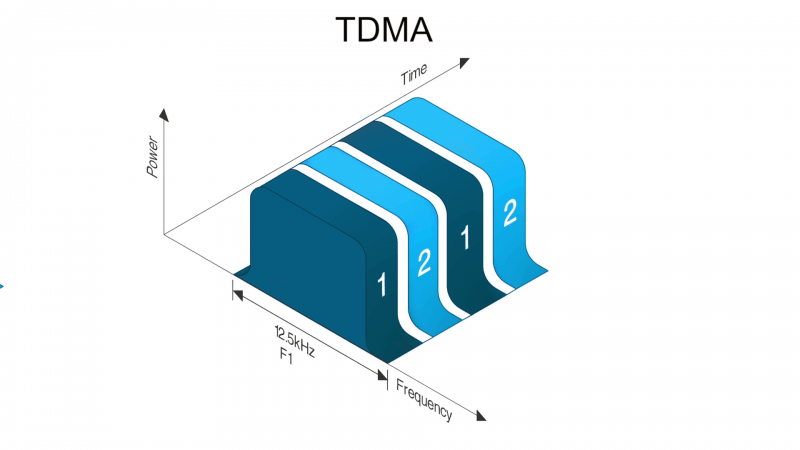
What is Time Division Multiple Access (TDMA)?
Time Division Multiple Access (TDMA) is a digital modulation technique used in digital cellular telephone and mobile radio communication. TDMA is one of two ways to divide the limited spectrum available over a radio frequency (RF) cellular channel. The other is known as frequency division multiple access (FDMA).
Simply, TDMA enables users to transmit data using the same frequency but in different time slots. In this method, the time slot is being divided among users.
How does TDMA work?
In TDMA, users transmit in rapid succession, each using their own time slot. This shuttling process is so fast each user thinks they occupy the same RF channel at the same time. By allocating a discrete amount of bandwidth to each user, TDMA increases the amount of data that can be carried over the channel, while enabling simultaneous conversations.